For decades, enterprise systems have served as systems of record, repositories that stored data, tracked transactions, and supported reporting. While powerful, these platforms have largely been reactive, relying on human intervention to interpret insights and trigger actions.
Today, that paradigm is shifting. AI agents are transforming enterprise systems into systems of intelligence, capable of reasoning, acting, and continuously learning. Instead of waiting for commands, enterprise platforms are beginning to anticipate needs, automate decisions, and orchestrate workflows across business functions.
This evolution marks a fundamental turning point in how organizations operate, scale, and compete.
What Are AI Agents in Enterprise Systems?
AI agents are autonomous, goal-driven software entities that can perceive data, reason over it, make decisions, and execute actions, often across multiple systems.
Unlike traditional automation or rule-based workflows, AI agents can:
- Interpret context from structured and unstructured data
- Learn from outcomes and adapt over time
- Collaborate with other agents or humans
- Act proactively rather than reactively
In enterprise environments, AI agents function as digital coworkers, continuously working behind the scenes to optimize processes and outcomes.
From Passive Records to Active Intelligence
Traditional Enterprise Systems
- Capture and store data
- Require manual queries and dashboards
- Depend heavily on human judgment
- Operate in functional silos
AI-Agent–Driven Enterprise Systems
- Continuously analyze live data streams
- Detect patterns, anomalies, and risks in real time
- Trigger actions automatically
- Coordinate across departments and platforms
The shift is subtle but profound: data no longer waits to be used, and AI agents put it to work instantly.
How AI Agents Are Reshaping Enterprise Operations
1. Intelligent Decision-Making at Scale
AI agents can evaluate thousands of variables simultaneously, enabling faster and more consistent decisions across finance, operations, HR, and customer experience.
Examples include:
- Dynamic pricing adjustments
- Risk-based credit or claims approvals
- Real-time supply chain rerouting
2. Autonomous Workflow Orchestration
Rather than automating isolated tasks, AI agents manage end-to-end workflows. They monitor dependencies, resolve exceptions, and escalate only when human judgment is truly needed.
This reduces bottlenecks and enables straight-through processing across complex enterprise processes.
3. Predictive and Preventive Intelligence
AI agents don’t just react, they anticipate. By learning from historical patterns and real-time signals, they can:
- Predict system failures
- Identify compliance risks early
- Forecast demand fluctuations
This shift from reactive to preventive operations delivers measurable gains in efficiency and resilience.
4. Personalized, Context-Aware Experiences
In customer-facing and employee-facing systems, AI agents tailor interactions based on behavior, preferences, and intent, creating experiences that feel responsive and human.
From intelligent content recommendations to adaptive learning platforms, AI agents enable hyper-personalization at enterprise scale.
Why AI Agents Matter Now
Several forces are converging to accelerate adoption:
- Explosion of enterprise data
- Advances in large language models and reasoning systems
- Increasing demand for real-time decision-making
- Pressure to improve productivity
Together, these trends make AI agents not just a competitive advantage, but a strategic necessity.
Building the Intelligent Enterprise: What It Takes
Successfully deploying AI agents requires more than adding AI to existing systems. Enterprises must focus on:
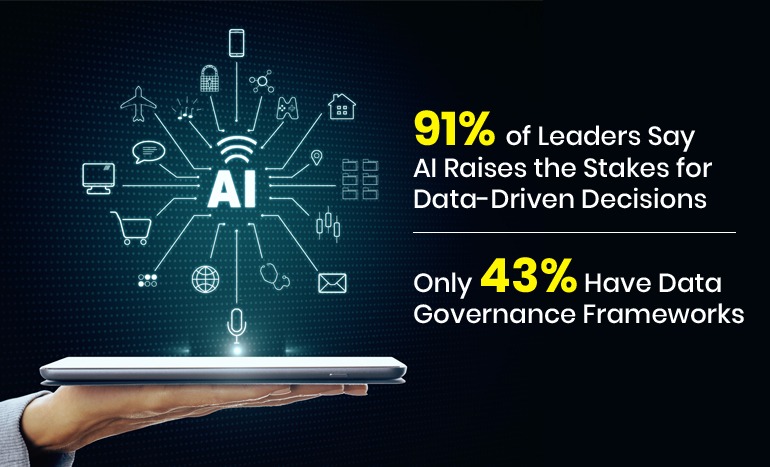
- Clean, well-governed data foundations
- Interoperable architectures and APIs
- Human-in-the-loop controls for trust and accountability
- Continuous learning and performance monitoring
Organizations that treat AI agents as core architectural components, rather than bolt-on features, unlock the greatest value over time. This is where experience in designing scalable digital platforms and AI-ready ecosystems becomes critical.
The Road Ahead
As AI agents mature, enterprise systems will increasingly operate as self-optimizing ecosystems, where software understands goals, adapts to change, and collaborates seamlessly with people. However, this intelligence must operate within clear human-defined guardrails to ensure accountability, trust, and alignment with business and ethical priorities.
The future enterprise won’t just record what happened. It will decide what to do next, with humans setting the boundaries that guide those decisions.
Authored by – Ravikiran SM and Rahi Sarkar